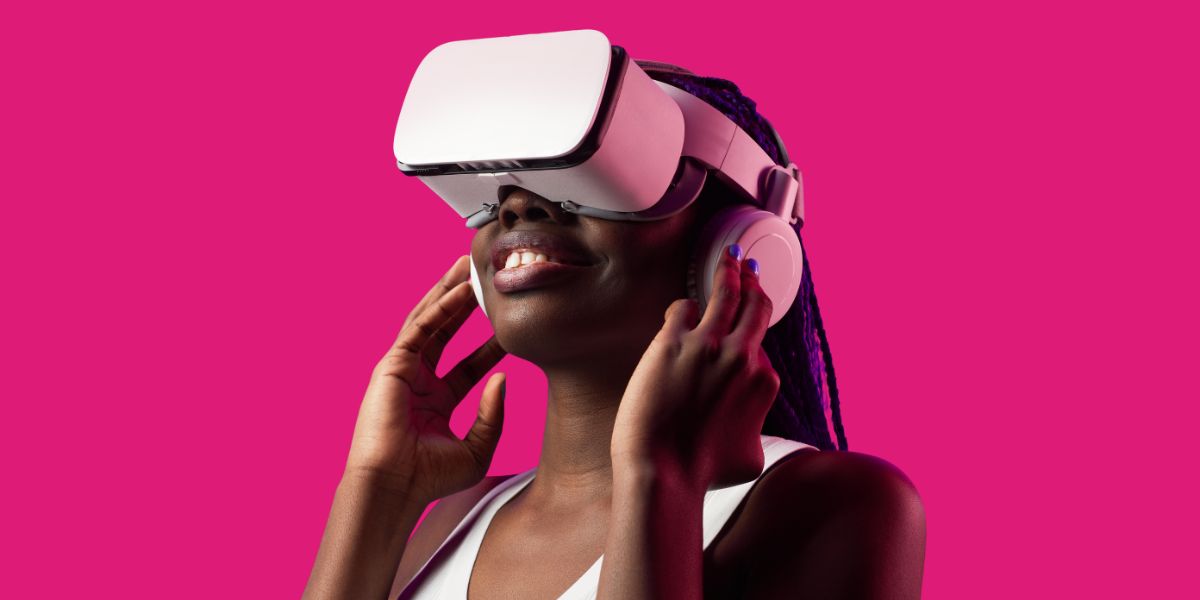
Virtual reality (VR) has come a long way from its early prototypes and niche gaming setups. What once seemed like science fiction is now a part of mainstream technology, reshaping how people work, learn, play, and interact. As hardware improves and software becomes more immersive, the question on many minds is—what’s next for VR consumers?
The Evolution of VR Technology
VR technology has rapidly evolved in the last decade. From bulky headsets with limited motion tracking to lightweight wireless devices, innovation has made VR far more accessible. Companies like Meta, Sony, and Apple have accelerated development through products such as the Meta Quest 3, PlayStation VR2, and Apple Vision Pro. These devices push the boundaries of realism, blending high-resolution displays, advanced sensors, and improved field of view for an unparalleled immersive experience.
Table of Contents
Another key advancement is mixed reality (MR)—the blending of virtual and real-world environments. This hybrid approach allows users to interact with both digital elements and their physical surroundings, opening new doors for gaming, design, and education.
Beyond Gaming: New Frontiers for VR
While gaming remains the most popular use case, VR’s potential goes far beyond entertainment. Industries worldwide are harnessing its capabilities to redefine experiences and improve efficiency.
- Healthcare: Surgeons use VR simulations for training and planning complex procedures, while therapists employ VR-based treatments for anxiety, PTSD, and phobias.
- Education: Virtual classrooms allow students to explore interactive lessons—from walking through ancient civilizations to conducting virtual lab experiments.
- Work and Collaboration: Remote work has been transformed by virtual meeting spaces like Horizon Workrooms and Spatial, enabling teams to collaborate naturally despite distance.
- Real Estate: Homebuyers can tour properties from anywhere in the world through immersive 3D walkthroughs.
These applications prove that VR is not just a gadget—it’s becoming a tool for productivity, creativity, and personal growth.
Affordability and Accessibility
A major challenge for VR adoption has been cost and accessibility. High-end systems often required powerful PCs and expensive headsets. However, standalone devices have changed that narrative. The Meta Quest 3, for instance, offers a high-quality VR experience without external hardware, making it more appealing for everyday consumers.
As prices continue to fall and competition grows, more people will be able to experience VR at home. Similarly, companies are prioritising comfort and ergonomics, making headsets lighter and more user-friendly. Accessibility features such as adjustable straps, prescription lens inserts, and simplified controls are bringing VR to a wider audience—including seniors and those with disabilities.
The Role of AI in the Next VR Wave
Artificial intelligence is poised to play a transformative role in VR’s future. AI can generate realistic environments, adaptive characters, and personalised experiences in real time. For instance, an AI-driven VR fitness app can analyse a user’s movements and adjust intensity levels dynamically, providing a tailored workout. Similarly, AI avatars can simulate human interaction for customer service, therapy, or companionship.
This convergence of AI and VR could lead to the next generation of “smart” virtual worlds—dynamic, responsive, and truly immersive.
Social and Ethical Considerations
As VR becomes a staple of digital life, questions about privacy, safety, and mental health are becoming increasingly important. Data collected through motion tracking and eye-tracking can reveal intimate behavioural patterns, raising privacy concerns. Additionally, prolonged VR use has been linked to motion sickness, eye strain, and social detachment in some users.
Developers and regulators must work together to ensure ethical standards are maintained. Features like content moderation, parental controls, and transparent data policies will be essential to build public trust and create safe virtual spaces.
What the Future Holds
Looking ahead, experts predict that VR will soon merge seamlessly with augmented reality (AR) to form extended reality (XR)—a unified ecosystem where digital and physical realities coexist. Imagine attending a concert from your living room or visiting a museum on another continent—all with the same device.
In the next five years, expect to see:
- Wider adoption of affordable, lightweight VR headsets.
- Enhanced integration of AI and haptic feedback.
- Broader use in education, healthcare, and retail sectors.
- More socially connected virtual platforms for everyday interaction.
Ultimately, VR is moving from novelty to necessity—a tool that will reshape how people communicate, learn, and live.
Conclusion
The future of virtual reality lies in accessibility, innovation, and responsible development. As hardware becomes more affordable and applications expand, VR is set to touch every aspect of modern life—from the classroom to the boardroom, from therapy to entertainment. The next decade promises a world where the line between the real and the virtual continues to blur, offering endless possibilities for consumers.
What do you think about the rise of virtual reality? Share your thoughts in the comments below and explore more future-forward insights at mcchc.org.